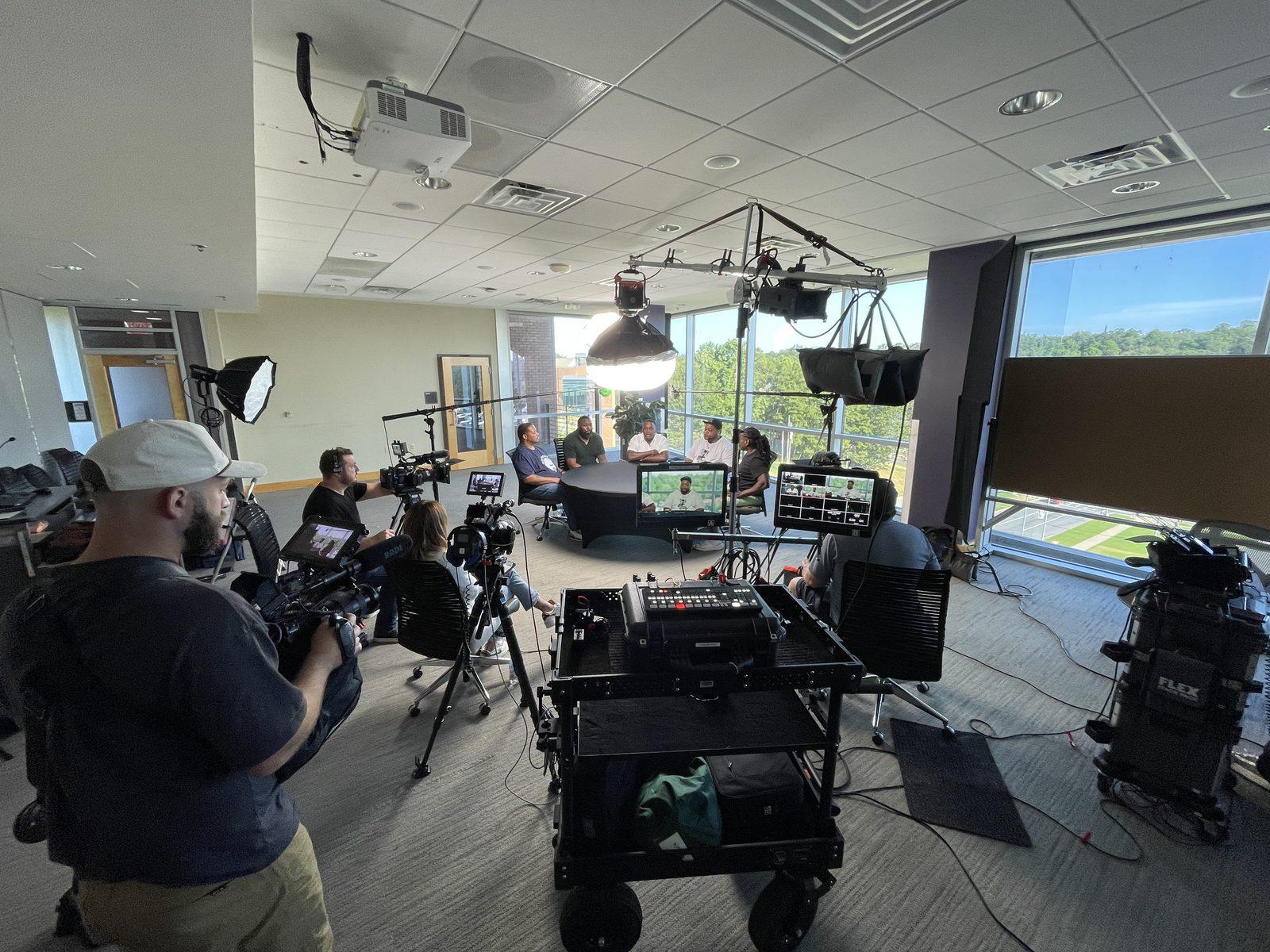
- Typical budget range
- $4,000-$30,000+ per project in Arkansas
- Typical timeline
- 5-10 weeks
- Most common formats
- Recruiting, capital campaign, alumni features, program highlights
- Critical considerations
- FERPA, brand guidelines, multi-stakeholder approval
- Key advantage
- Higher ed has built-in story density most clients don't
- Common Arkansas clients
- Universities, colleges, and private institutions across the state
Universities and colleges sit on more video opportunity than almost any other client category, and most of it goes unrealized. A typical institution has dozens of stories worth telling at any given moment: a researcher whose work just hit a national journal, an alumnus running a Fortune 500 company, a first-generation student who's about to walk across the stage, a capital project ready for groundbreaking. Most of these stories never get filmed, and the ones that do often get filmed badly. This guide is for university communications teams, marketing offices, advancement shops, and admissions departments who want to do better.
In this guide
- The opportunity higher ed institutions are missing
- The five most valuable video categories for universities
- Pricing and what affects cost
- Working with university communications teams
- FERPA, releases, and on-camera consent
- Distribution across recruiting, advancement, and brand
- Common pitfalls and how to avoid them
- Frequently asked questions
The opportunity higher ed institutions are missing
A university is, in marketing terms, a content factory that doesn't know it. Students arrive, learn, struggle, succeed, and graduate. Faculty research, publish, teach, and mentor. Alumni go on to careers, families, achievements. Donors give, often transformatively. Campuses grow, change, host events, win championships. Every one of these is potential video content.
The institutions that recognize this advantage and invest in it accordingly pull ahead in three measurable areas: recruiting yield (the percentage of admitted students who enroll), alumni engagement (giving rates and event attendance), and faculty recruitment (a strong visible brand attracts better hires).
The ones who don't invest tend to produce video the same way they did in the 1990s: an annual "viewbook" supplement video for admissions, the occasional capital campaign anchor piece, and a few event recaps. Everything else sits on the table.
What's changed is that the cost of high-quality video has dropped substantially while the channels that demand video content have multiplied. A university that produces eight pieces of professional video content per year for $30,000-$50,000 total can populate its recruiting funnel, alumni communications, social channels, and advancement materials with original content that competitors can't match.
The five most valuable video categories for universities
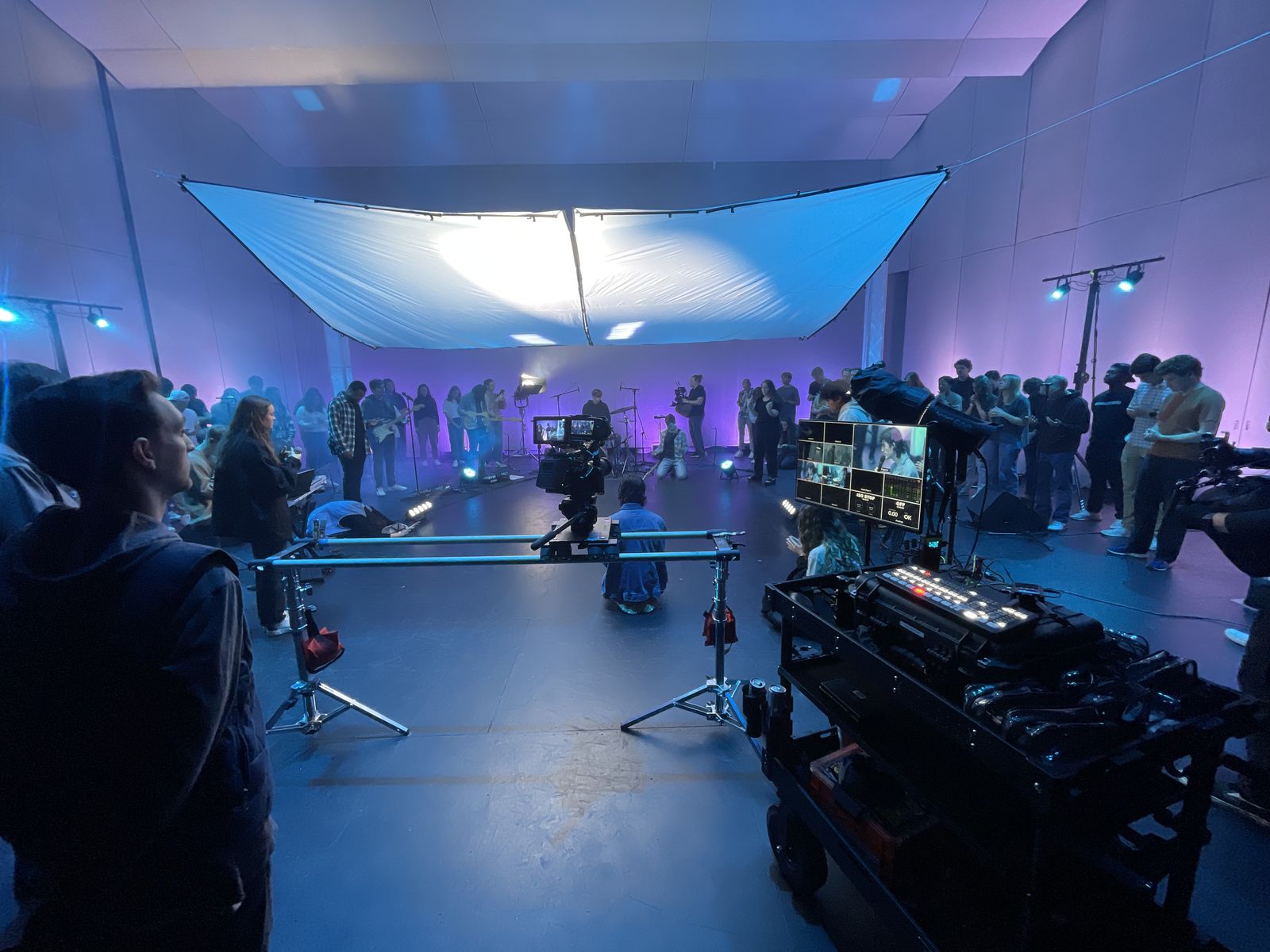
Not all university video is equally valuable. These five categories produce the highest return per dollar invested.
1. Recruiting and admissions video
The video content prospective students and their families see during their decision process. Lives on admissions pages, in email campaigns, at recruitment events, and increasingly on YouTube and TikTok where prospects do their own research.
The best recruiting videos avoid two common mistakes. First, they don't try to be everything to everyone. A focused video about a specific program, student experience, or campus feature outperforms a generic "welcome to our university" piece. Second, they feature real students, not actors and not the same three telegenic students every video uses.
Budget range: $6,000-$20,000 for a hero piece; $3,000-$8,000 for program-specific pieces Timeline: 6-10 weeks Best for: Admissions yield events, online recruitment funnels, program-specific marketing
2. Alumni feature video
A 2-4 minute documentary-style piece following an alumnus whose story illustrates the institution's value. It's the single highest-conversion format for advancement work, because donors give to humans, and alumni features humanize the institution.
The format works because it sidesteps the credibility problem of institutional self-promotion. When a graduate talks about their experience and what it led to, it lands differently than when the institution makes the same claim.
Budget range: $5,000-$12,000 Timeline: 5-7 weeks (most of which is scheduling around the alumnus's calendar) Best for: Donor cultivation, capital campaigns, anniversary celebrations, magazine features
3. Capital campaign video
A 3-5 minute anchor piece used to launch and sustain a major giving campaign. It's the most production-intensive category. These pieces often involve multiple locations, several interviews, drone work, motion graphics with funding goals, and high production value.
The institutions that do this well treat the campaign video as a multi-year asset. They produce a hero piece at launch and several derivative pieces throughout the campaign, donor recognition videos, milestone updates, completion celebrations.
Budget range: $15,000-$30,000+ for a hero piece; campaigns often produce 5-10 related pieces Timeline: 8-12 weeks for the hero piece Best for: Major campaigns, transformational gifts, capital projects
4. Faculty and research video
Short pieces (90 seconds to 3 minutes) highlighting individual faculty, research projects, or academic programs. Used for faculty recruitment, program marketing, research awareness, and academic prestige building.
This category is underutilized at most institutions. A short, well-produced faculty profile costs $3,000-$5,000 and can be used in faculty recruitment for years.
Budget range: $3,000-$7,000 per piece Timeline: 3-5 weeks Best for: Faculty recruiting, program marketing, research communications, grant proposals
5. Athletics and event content
Recap and feature content tied to athletic events, commencement, convocations, and major campus moments. Different from in-game broadcast footage, these are produced pieces with a narrative structure.
Budget range: $3,000-$10,000 per event day Timeline: 2-4 weeks post-event Best for: Recruitment of athletes, fan engagement, athletic department social media
Pricing and what affects cost
Higher ed video pricing in Arkansas runs $4,000-$30,000+ depending on scope. Most institutional projects fall in the $6,000-$15,000 range. Six factors drive cost.
Number of shoot days and locations. A single-location interview shoot is the floor. A campaign hero piece might involve five or six shoot days across multiple campuses, locations, and event coverage windows.
Number of stakeholders and interviews. University projects typically involve more on-camera subjects than corporate work, students, faculty, administrators, alumni, board members. Each interview is a logistical commitment.
Approval process complexity. A project that needs sign-off from the communications office, the president's office, athletics, and legal will cost more in revision rounds and meeting time than one with a single decision-maker.
Brand compliance requirements. Most universities have detailed brand guidelines covering fonts, colors, logo placement, music selection, and visual identity. Following these carefully takes time and edit revisions.
Drone, gimbal, and specialty footage. Most quality university video uses drone establishing shots for campus footage. Some include gimbal-stabilized motion work, time-lapse, or specialty rigging for events.
Motion graphics and animation. Capital campaign videos in particular often require custom motion graphics showing goals, progress, donor recognition, or project visualization.
Common higher ed production budgets in Arkansas
- Single-purpose project: $4,000-$8,000. One shoot day, focused topic, single deliverable. Best for faculty features, program highlights, alumni profiles.
- Standard institutional project: $8,000-$15,000. Multi-day production, motion graphics, multiple deliverables, drone work. Most recruiting and advancement pieces fit here.
- Major campaign work: $15,000-$30,000+. Multi-week production, complex deliverables, multiple stakeholders, comprehensive distribution package.
Get a real scope and budget in 24 hours.
Tell us about your goals and we'll come back with a recommended format, a realistic timeline, and a written proposal.
Request a Proposal →Working with university communications teams
University projects fail more often than corporate projects do, and the reason is almost always organizational rather than creative. Universities are committee-driven institutions with complex internal politics, and video projects can stall or collapse under that weight.
The institutions that produce video successfully share a few practices.
They designate a single project owner with authority. Not a committee. One person, usually a director of communications or marketing, owns the project, makes day-to-day decisions, and reports outcomes upward. Committees should provide input, not approval, on creative decisions.
They share brand guidelines and required approvals upfront. Reputable production companies will follow brand guidelines if they're shared at the start. Discovering halfway through post-production that the institution has a font policy or music licensing restriction costs everyone time and money.
They schedule realistically around academic calendars. Filming around graduation, finals week, summer break, and holiday closures requires planning. Trying to capture a "vibrant campus" video during summer when students aren't there produces unusable footage. Plan shoots during high-energy academic moments.
They prepare interview subjects. A student who shows up to an on-camera interview having never thought about what they want to say produces weak footage. Send interview questions in advance, encourage thinking about specific examples, and let people know what to wear.
They coordinate with athletics, security, and facilities. Drone work requires FAA Part 107 compliance and often campus permission. Indoor filming requires facility coordination. Athletic events have media rules. All of this needs lining up before crew arrives.
FERPA, releases, and on-camera consent
Higher education has stricter privacy requirements than most client categories. The Family Educational Rights and Privacy Act (FERPA) restricts how student information can be shared, and that extends to identifiable images and video in some circumstances.
Practical guidelines for compliance:
Always get written video releases from students. A standard talent release that grants permission to use the footage in marketing and communications, signed before filming. Most institutions have a standard form, use it.
Be especially careful with minors on campus. Camps, dual-enrollment students, and visiting K-12 groups require parental consent. Don't film identifiable minors without it.
Avoid filming students who haven't consented. If you're capturing campus B-roll in public spaces, that's generally fine. If you're capturing identifiable students in classrooms or close-up, you need permission. Many productions post signs at entry points indicating filming is in progress and provide an opt-out path.
Coordinate with the institution's general counsel for sensitive content. Anything involving health services, counseling, Title IX situations, athletic injuries, or other potentially sensitive areas should go through legal review.
Treat international students with care. Some international students have legitimate concerns about visibility in marketing materials that could affect their home country status. Default to obtaining specific consent and offering opt-out.
Distribution across recruiting, advancement, and brand
The asset is only valuable if it's used. The best institutional video lives in many places.
Admissions and recruitment.
- Admissions website program pages
- Email nurture sequences for inquiry-stage prospects
- Yield event communications (admitted students)
- YouTube channel as a discovery surface
- Recruitment travel and high school visits
Advancement and donor relations.
- Donor cultivation meetings (bring the video to one-on-ones)
- Email campaigns to lapsed donors
- Capital campaign update communications
- Recognition events for major donors
- Grant applications and stewardship reports
Brand and external communications.
- Institutional homepage
- About pages and program pages
- Social media (with vertical cutdowns produced from horizontal originals)
- Paid advertising on YouTube, LinkedIn, and Instagram
- Media kits and press inquiries
Internal communications.
- Faculty and staff onboarding
- All-employee communications
- Board meetings and updates
- Trustee communications
Single hero pieces produced for one purpose often end up living productively across all of these channels for years.
Common pitfalls and how to avoid them
A few patterns show up repeatedly in higher ed video projects gone wrong.
Trying to make one video do too many jobs. The recruitment video that's also for advancement that's also for the homepage that's also for athletics. Single-purpose video that does one job well beats multipurpose video that does several jobs poorly.
Over-scripting students. Students reading scripted lines sound like students reading scripted lines. Use interview questions, not scripts. The authenticity that prospective students respond to comes from real responses, not polished delivery.
Underestimating the alumni schedule problem. A successful alumnus you want to feature is, by definition, busy. Plan on weeks or months of scheduling to align their availability with your production timeline. Start the conversation early.
Underbudgeting for the project's actual scope. A $5,000 budget for a video the president has signed off on rarely produces what the president wanted to see. Match the production value to the visibility of the deliverable.
Skipping the brand alignment conversation. Show the production company your brand guidelines, examples of approved past video, and your visual identity standards before filming begins. Better to align upfront than revise endlessly in post.
Frequently asked questions

Get a real quote in 24 hours.
Tell us about your goals, whether that's recruiting, advancement, alumni, or program marketing, and we'll send back a written proposal with format, timeline, and pricing. Within one business day.
Request a Free Quote →