- Most common mistake
- Trying to script your answers
- Second most common mistake
- Wearing the wrong clothes
- Time investment to prepare
- 30 minutes of reading, plus 15 minutes the morning of
- What matters more than performance
- Answering in complete thoughts
- What to do night before
- Sleep, hydrate, avoid heavy meals
- What NOT to do
- Memorize lines
You agreed to be on camera. Now you're nervous. That's normal. Almost everyone is, the first time. The good news is that everyone you see on screen who looks natural has been coached, has done it before, or both. There's nothing magical about being good on camera. It's mostly about preparation, and the preparation isn't complicated. This guide walks through everything you need to know in the week before your shoot.
In this guide
The week before
Five to seven days before your shoot, the production company should send you interview questions or topics in advance. If they don't, ask for them. Knowing what's coming dramatically reduces anxiety.
When you get the questions, don't write out word-for-word answers and try to memorize them. This is the single biggest mistake first-timers make. Memorized answers sound memorized, which sounds fake. The camera picks it up immediately and the final video suffers.
Instead, do this: read each question and think about one specific story, example, or moment that illustrates your answer. Write down three or four words to anchor that memory. Not full sentences, just keywords. The goal is to know what you want to say, not how you're going to say it.
For each main question, also think about what you'd want a stranger to take away. Not the corporate party line. The actual point. If you can identify the takeaway, the words tend to come naturally when the camera rolls.
If there's an industry term, statistic, or specific name you want to mention, write that down separately. Specifics are hard to recall under pressure, and a director can prompt you if needed.
Do not practice in the mirror. Mirror practice teaches you to perform at yourself, which is the opposite of what good on-camera communication looks like. If you want to practice, do it conversationally with another person who can ask follow-up questions.
What to wear
Clothing matters more than people expect. Here are the rules.
Solid colors work best. Mid-tone solids, navy, burgundy, forest green, charcoal, are the safest choices. They look good on camera, don't compete with your face, and won't look dated when the video is used three years from now.
Avoid pure white and pure black. Pure white blows out the camera's exposure; pure black absorbs all light and crushes detail. Off-white, cream, charcoal, and dark navy are better.
Avoid busy patterns. Small repeating patterns, pinstripes, fine checks, herringbone, hounds-tooth, create a visual interference called moiré on camera. It looks like the pattern is vibrating. Larger patterns are fine; small ones are not.
Skip logos. Brand logos on clothing pull attention. Unless the logo is the point (you're representing your company on camera and wearing a branded polo, for example), leave it at home.
Match the formality to the context. A CEO talking about strategy should not wear a t-shirt. A creative director talking about culture should probably not wear a three-piece suit. Match what you'd wear to a meeting with the type of audience you're addressing.
Watch your accessories. Dangling earrings, large necklaces, or noisy bracelets can cause distractions or audio problems. Simple is better. The lavalier microphone clips to your shirt; loud necklaces interfere with it.
Bring options. Even if you're confident in your outfit choice, bring one or two alternates. Sometimes lighting reveals issues with a particular color on a particular day. Having options helps.
Hair and makeup. Whatever you'd do for a typical professional meeting. If you wear makeup, slightly more than usual is fine, studio lights wash out features. If you don't, you don't need to start now. Powder for shine is helpful for almost everyone; the production company often has some available.
Glasses. If you wear them daily, wear them on camera. Glasses that come off and on look strange across cuts. The production team will handle any reflection issues.
What to eat and drink
The morning of your shoot, eat normally. Skipping breakfast is a bad idea. Low blood sugar makes you tired and foggy, which the camera picks up. Eat what you'd eat on a typical work day.
Avoid heavy or oily foods immediately before. A greasy breakfast can show up as shine on your face under studio lights.
Avoid dairy in the hour before filming. Milk, cheese, and yogurt create mucus in some people's throats, which can cause throat-clearing and mouth-clicking on the microphone. Almond milk in coffee is fine; a yogurt smoothie 30 minutes before filming is risky.
Hydrate, but moderately. Drink water throughout the morning. Don't chug a liter right before the shoot starts. You don't want to be desperate for a bathroom break in the middle of a take.
Limit caffeine to your normal amount. Extra caffeine on an unusual day can amplify nervousness and create fast, jittery speech. Stick to your routine.
Avoid alcohol the night before. It dehydrates you, affects your sleep, and shows up on camera in your eyes and skin. Save the celebration for after the shoot.
Get a real scope and budget in 24 hours.
Tell us about your goals and we'll come back with a recommended format, a realistic timeline, and a written proposal.
Request a Proposal →The night before
Sleep matters more than anything else you'll do to prepare. A well-rested person on camera looks alert, confident, and present. A tired person looks tired, no matter how well they're lit. Go to bed at your normal time or earlier.
Review your topic notes one more time. Not to memorize, just to refresh what you want to talk about. Ten minutes is enough.
Charge your devices. If you're traveling to a location, make sure your phone is charged for the trip and any communication you need.
Lay out your clothes. Decide what you're wearing and have it ready. Decisions in the morning when you're nervous are harder than decisions made calmly the night before.
Don't do anything unusual. Now is not the time to try a new face mask, a new haircut, or a new outfit. Stick to what you know.
The morning of
Wake up with enough time that you're not rushed. Rushing creates anxiety that's hard to shake off once filming starts.
Shower and groom normally. Trim stray hairs around your ears, eyebrows, and nose if needed. Brush your teeth thoroughly, close-up shots will catch detail.
Eat your normal breakfast. Following the food and drink rules above.
Arrive early. Plan to arrive 15-30 minutes before your call time. This gives you a buffer for traffic, time to settle in, and a few minutes to use the restroom and get water before filming starts.
Bring a printed copy of your topic notes. Not to read on camera, but to glance at between takes if you forget something. Phones distract; paper is fine.
Wear or bring deodorant. Studio lights are hot, and you'll be under them for hours. Don't overdo perfume or cologne, because the crew will be close to you for audio and makeup adjustments.
When you arrive on set
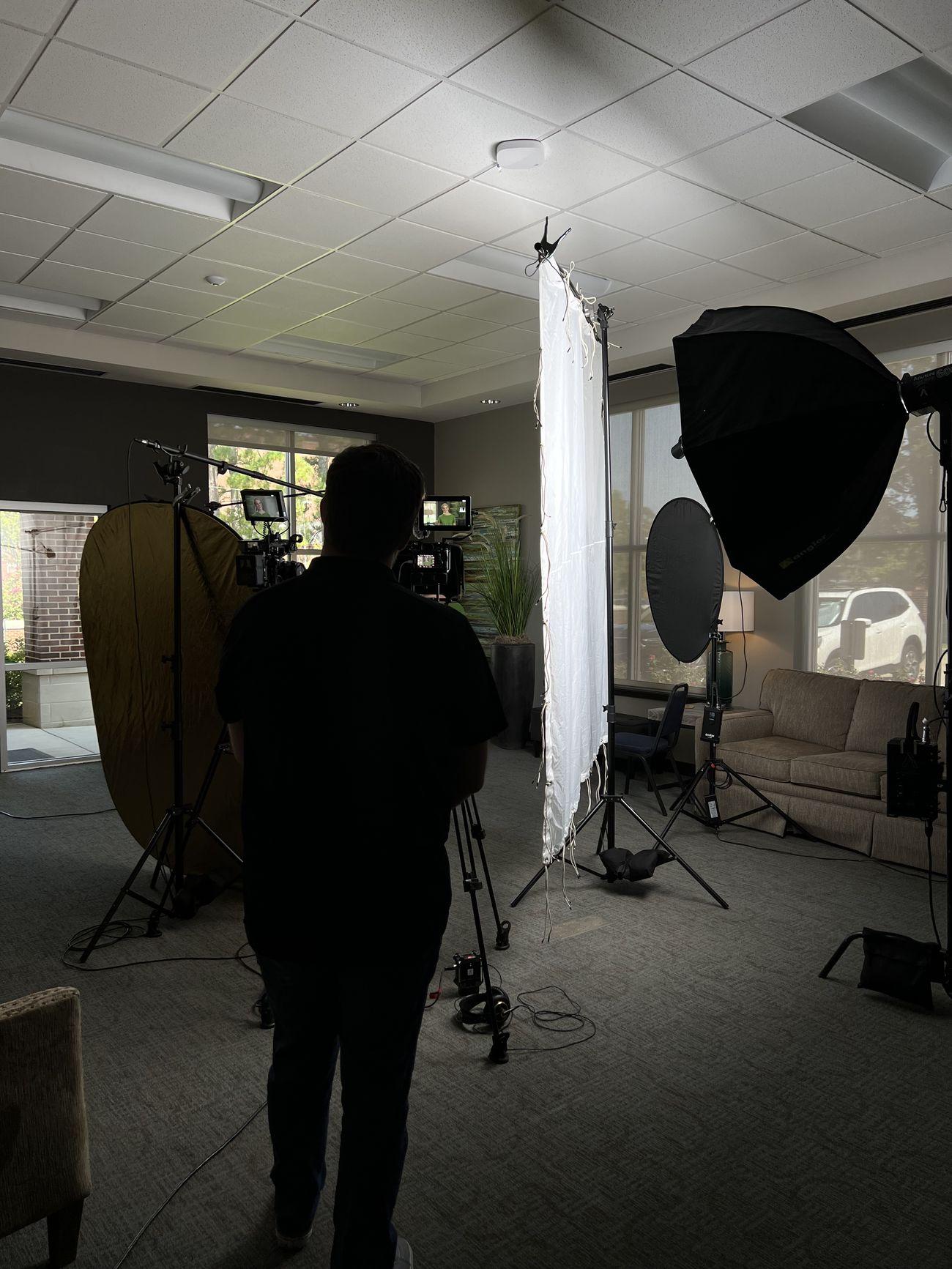
The crew will be busy when you arrive. That's normal. They're setting up cameras, lighting, and audio while you're getting settled. Don't take it personally if they're not immediately attentive.
Meet the director and the audio person first. The director is who you'll be talking to during the interview. The audio person will mic you up, clipping a small wireless microphone to your shirt and routing the cable under your clothes.
Ask questions. Where am I sitting? Where am I looking? How long will this take? Should I look at you or at the camera? Anything you're unsure about, ask. The crew has done this hundreds of times and welcomes the questions.
Use the restroom and get water. Once you're miked and seated, getting up takes 10 minutes of micing and re-setting. Use the bathroom before that happens.
Stretch and breathe. Roll your shoulders. Take three slow breaths. Loosen your jaw. Most people clench their jaw when nervous, which affects speech.
During the interview
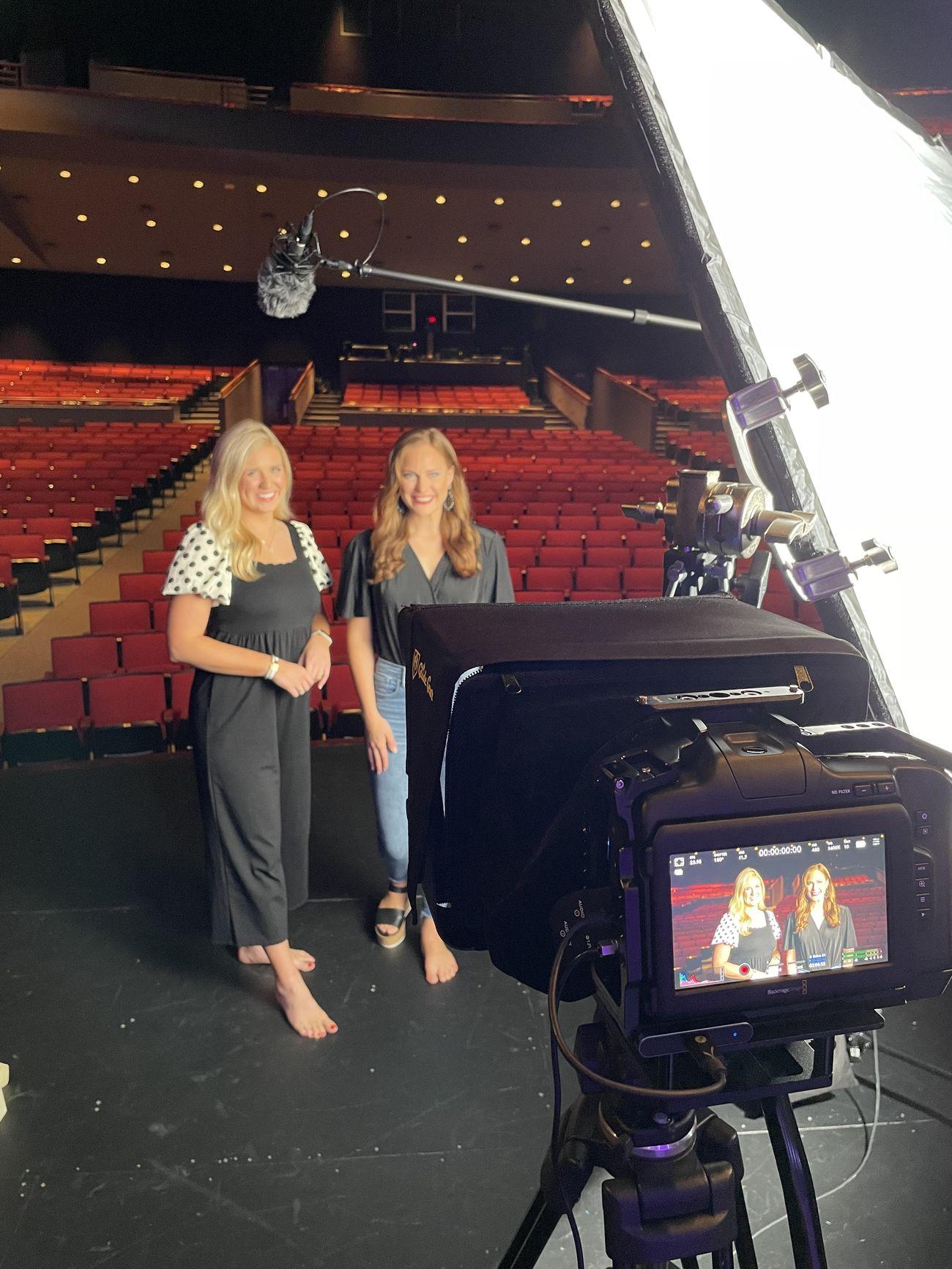
This is where most of your nervousness will be. Here's what helps.
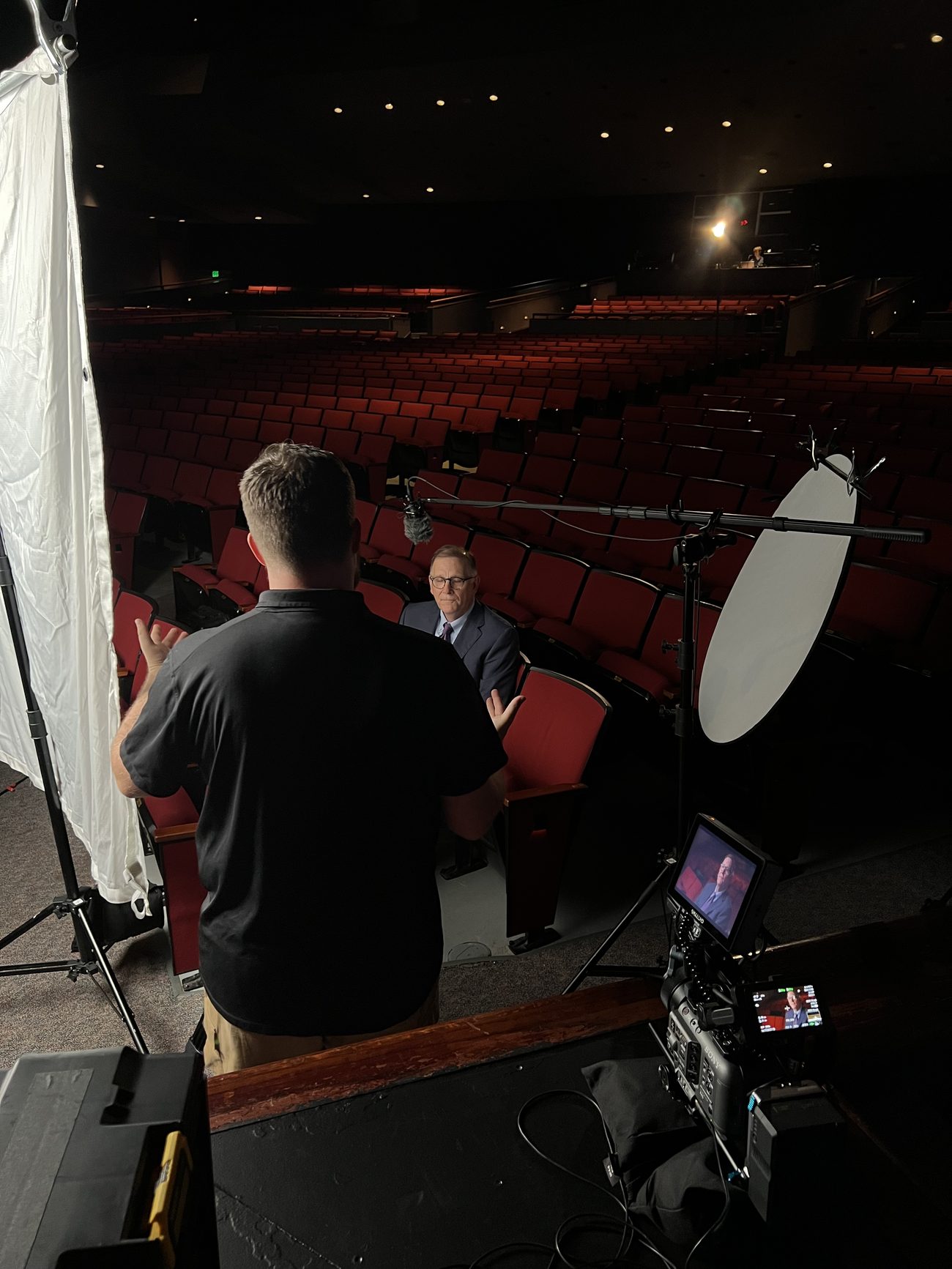
Look at the interviewer, not the camera. Unless specifically directed otherwise, you'll be looking at the director or interviewer, who's standing or sitting just beside the camera. This produces a natural off-camera gaze that looks engaged and authentic.
Answer in complete thoughts. When the interviewer asks "What inspired you to start the company?", don't answer "Well, I was working in finance and...", answer "I started the company because..." This is the single most important on-camera skill. Your answer needs to make sense without the question being audible. The interviewer's voice usually gets edited out; your answer must stand alone.
Don't worry about restarting. If you flub a sentence, just stop and say "Let me try that again." The editor will cut between takes. Restarts are normal and expected.
Take a beat before answering. A small pause before you start talking creates better editing options and gives you time to think. Rushing into answers leads to long, run-on responses.
It's okay to ask for the question to be repeated. If you forget the question halfway through, just say so. The interviewer will ask it again.
Don't apologize for being nervous. Everyone is nervous. The director knows. Saying "sorry, I'm nervous" wastes a take and reinforces the feeling. Just take a breath and continue.
Pace yourself. First-time interviewees tend to rush. Slow down by about 20% from your natural conversational speed. Pauses between thoughts are fine, even helpful for editing.
If you don't know an answer, say so. "That's a great question, I'd want to think more about that before giving you a real answer." The director can move on. Trying to fake an answer produces footage that won't make the cut anyway.
Stay in the moment between questions. Don't drop your face the moment a question ends. Stay engaged for a beat. The editor often uses those quiet moments between answers for cutaways and pacing.
After the interview
When the director says you're done, take a breath. You probably did better than you think.
Get unmiked carefully. The audio person will help. Don't tug on the cable yourself.
Drink water. You probably talked more than you realize.
Ask when you'll see the result. Most projects have a multi-week post-production timeline. Knowing what to expect prevents you from wondering if anything is happening.
Don't ask to re-do anything. Trust the editor. They'll use your best takes. If you're worried you said something wrong, mention it to the director, they can flag it for the editor.
Send a quick thank you. Production crews are hardworking and rarely thanked. A short email or text after the shoot is appreciated.
Frequently asked questions
Get a real quote in 24 hours.
Tell us what you're planning and we'll send back a written proposal with scope, timeline, and pricing. Within one business day.
Request a Free Quote →